
If you’ve ever wished your walls could do a better job of keeping noise out, or in, you’re not alone. Whether it’s traffic outside, neighbors on the other side, or family members in the next room, unwanted noise can make your home feel less peaceful.
Drywall is the most common wall material in U.S. homes, but how well does it really block sound? The truth: Drywall offers some sound resistance, but it’s not a complete soundproofing solution on its own. The good news is, with the right methods and materials, you can significantly improve how much noise your walls block.
In this guide, we’ll explain how drywall affects sound, compare standard drywall to soundproof alternatives, and share proven strategies for making your walls quieter.
Understanding How Soundproofing Works
Before diving into drywall, it helps to know how sound travels.
- Airborne Noise: Includes voices, TV, music, and barking dogs. Travels through the air, vibrating walls, floors, and ceilings as it passes.
- Impact Noise: Includes footsteps, doors slamming, or bass vibrations. Transfers through solid structures make it harder to stop.
The key to soundproofing is reducing both types of noise. Installing soundproof drywall contributes to this, but its effectiveness depends on thickness, density, and installation.
Does Standard Drywall Block Sound?
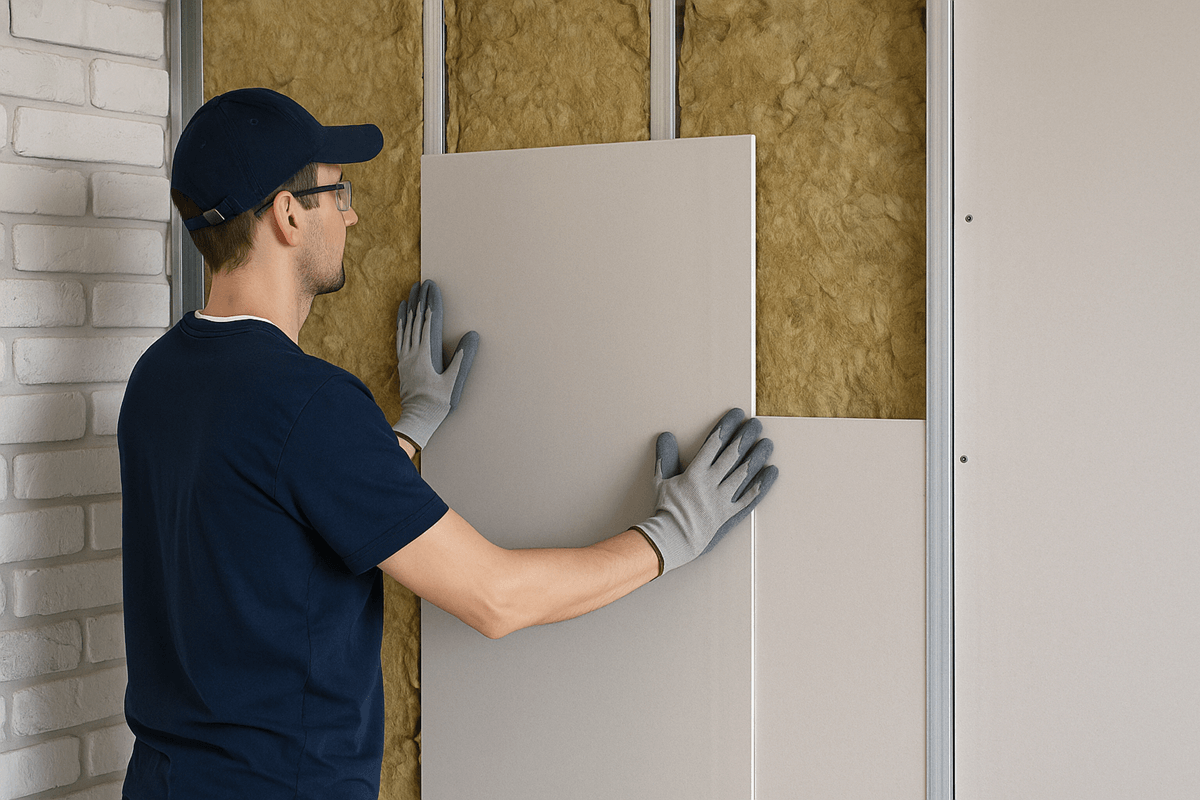
Drywall does provide some natural sound resistance. Its density and weight make it capable of blocking a portion of the sound energy that travels through walls, which is why it’s widely used in residential and commercial construction. However, its effectiveness depends on thickness and installation.
STC Rating (Sound Transmission Class)
Standard ½-inch drywall typically has an STC rating between 30 and 34. This rating means it can muffle everyday conversation reasonably well, but it won’t stop louder noises such as music, television, or heavy foot traffic.
In other words, it provides a basic level of noise control but falls short if complete quiet is the goal.
Limitations of Regular Drywall
Despite offering some resistance, regular drywall has clear limitations. A single thin layer allows much of the sound to pass through, and hollow wall cavities can actually amplify noise if they aren’t filled with insulation.
On top of that, vibrations often transfer through the studs that support the existing drywall, carrying sound from one side of a wall to the other. Because of these drawbacks, drywall alone is rarely “good enough” when true soundproofing is required.
Ways to Enhance Drywall Soundproofing
The good news? You can upgrade your traditional drywall panels setup without starting from scratch. Here are proven methods homeowners and contractors use:
#1: Double-Layering Drywall
- Adding a second layer increases mass, and multiple layers make it harder for sound waves to pass through.
- Staggering seams between sheets helps reduce leaks from the existing wall.
#2: Using Soundproof Drywall
- Specialized products like QuietRock or SoundBreak are designed with extra-dense materials and damping layers.
- Can achieve STC ratings of 50 or higher with just one layer, compared to two layers of standard drywall.
#3: Adding Insulation
- Filling wall cavities with fiberglass or mineral wool absorbs sound energy.
- Mineral wool (like Roxul) is denser and often more effective for noise reduction.
#4: Installing Resilient Channels or Sound Clips
- These metal strips decouple drywall from the framing.
- By breaking the vibration path, they greatly reduce impact and airborne noise transfer.
#5: Sealing Gaps with Acoustic Caulk
- Even the smallest gaps around outlets, trim, or wall joints let sound slip through.
- Acoustic caulk stays flexible over time, unlike standard caulk, so it keeps the seal intact.
Comparing Drywall to Other Soundproofing Materials
Drywall is just one piece of the soundproofing puzzle. Other materials can be combined with it for better results:
- Mass Loaded Vinyl (MLV): Flexible, rubber-like sheets installed behind drywall. Adds mass and blocks sound, especially effective for low frequencies.
- Acoustic Panels: Great for absorbing echoes and improving sound quality inside a room. Not as effective for blocking external noise.
- Green Glue Soundproofing Compound: Applied between two drywall layers. Works by converting sound energy into heat, reducing sound vibration transfer. Affordable and widely used in both residential and commercial projects.
When Is Drywall “Good Enough”?
Drywall on its own can sometimes be sufficient, especially if your goal is to reduce noise levels rather than completely eliminate them. In many everyday living situations, regular drywall paired with basic insulation can provide a reasonable level of quiet.
Residential Applications
For example, bedrooms, nurseries, and living rooms often benefit from the moderate sound control that standard drywall provides. In these spaces, thick drywall helps soften noise without requiring more complex solutions.
The same is true for home offices, where simply reducing background sounds, like a television in another room or household chatter, can improve focus and productivity.
When to Upgrade
However, drywall alone isn’t always enough. In apartments or townhomes with shared walls, soundproofing demands are usually higher since noise from neighbors can travel easily between units.
Likewise, home theaters, recording studios, and commercial spaces require more advanced methods to ensure privacy and create a truly quiet environment.
Any space exposed to heavy traffic, loud neighbors, or machinery will also benefit from upgrades like soundproof drywall, double layers, or resilient channels.
Room-by-Room Recommendations
Every room has different needs. Here’s how to approach common spaces:
- Bedrooms & Living Rooms: Use double drywall with fiberglass insulation for peace.
- Home Offices: Combine resilient channels with acoustic caulk for extra privacy.
- Apartments & Shared Walls: Mineral wool insulation plus Green Glue between two drywall layers works best.
- Home Theaters & Studios: A full system: double drywall, resilient channels, and MLV for near-complete soundproofing.
Final Verdict: Is Drywall Good for Soundproofing?
Drywall is a good starting point—its density naturally helps block some noise. But for most situations where soundproofing really matters, regular drywall alone isn’t enough.
The most effective results come from layering techniques, specialized drywall products, and complementary materials like insulation, Green Glue, and resilient channels.
The right choice depends on:
- How quiet do you need the space to be?
- Whether you’re building new walls or upgrading existing ones.
- Your budget for soundproofing materials and installation.
Key Takeaway
Drywall is helpful, but not a magic solution for noise. With the right upgrades, though, it can form the backbone of an effective soundproofing system—giving you quieter bedrooms, more private home offices, or a theater-quality entertainment space.
If you’re not sure where to start or want expert guidance, the team at BRK Drywall can help you find the best solution for your space and budget.