
Drywall sanding is one of those steps that looks simple until you’re standing in a cloud of dust, wondering why the seams still don’t look right. The truth is, drywall sanding takes patience, the right tools, and a few smart techniques to get that perfectly smooth, paint-ready surface.
The good news: once you understand the drywall sanding steps and what to look for, the process becomes a lot easier. This guide walks you through how to sand drywall properly, the best tools for drywall sanding, how to reduce drywall dust, and the mistakes that make sanding harder than it has to be.
If you’re prepping for a painting project or handling drywall repairs, these drywall sanding tips will help you get a clean, professional result.
Quick “Spot-It-Fast” Checklist: What Drywall Should Look Like Before You Paint
Before you dive into sanding, it helps to know the end goal. A smooth drywall surface means:
- No raised seams or tape lines
- Feathered edges that disappear into the surface
- No gouges, scratches, or swirl marks
- A uniform finish that looks clean even under angled light
Use a bright flashlight and scan the wall at an angle. Anything that casts a shadow, ridges, bumps, or dips, will likely show after painting. Note these spots before you start sanding.
What Is Drywall Sanding (And Why It Matters)?
Drywall sanding removes excess joint compound (mud), so seams blend into the wall. Even if your mudding work was careful, you’ll almost always have slight ridges or uneven edges that need smoothing. Sanding helps:
- Create a paint-ready surface
- Hide joint lines and drywall screw spots
- Prevent bumps and texture from showing through the final coat
Skipping or rushing this step is one of the biggest drywall sanding mistakes. A thin layer of paint won’t hide imperfections; if anything, it highlights them.
Dry Sanding vs. Wet Sanding: Which One Should You Use?
Dry Sanding
Dry sanding is the classic method, and what most pros use.
Best for: large walls, ceilings, and high-finish surfaces
Pros:
- Gives the smoothest finish
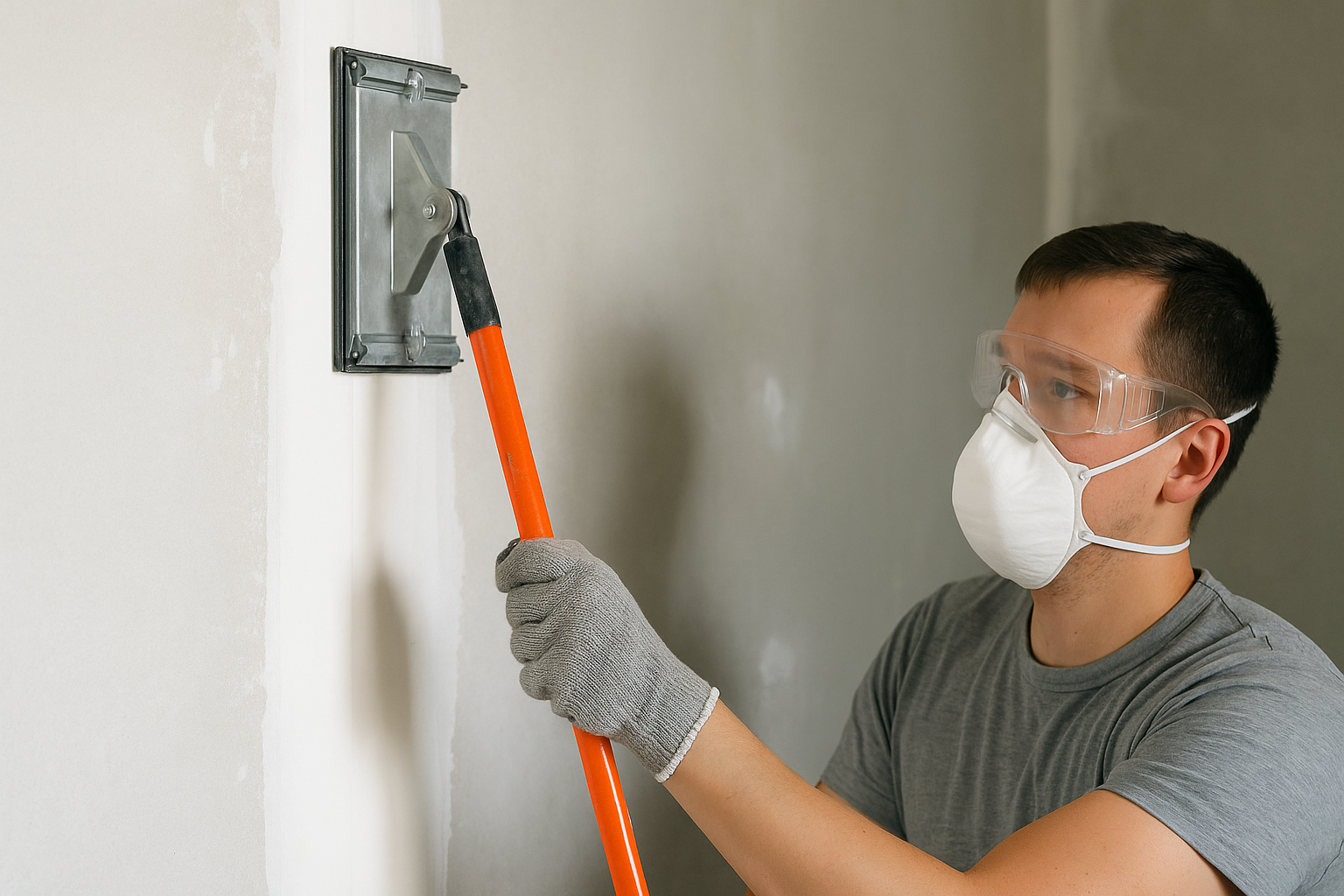
- Works well with sanding screens and pole sanders
Cons:
- Creates the most sanding dust (which is why drywall dust control matters)
Use dry sanding when you want crisp, clean blending and a perfectly smooth finish.
Wet Sanding
Wet sanding uses a damp drywall sanding sponge to smooth the drywall compound.
Best for: small patches, touch-ups, and homes where dust must stay low
Pros:
- Much less dust
- Good for a quick evening out
Cons:
- Doesn’t get surfaces as perfectly smooth
- Can slightly round edges
Wet sanding is great for finishing small repairs or working in tight spaces, but most full-room sand jobs still rely on dry sanding.
Best Tools for Drywall Sanding (What You Actually Need)
You don’t need every tool in the store, just the ones that make sanding cleaner and easier.
Must-Have Tools
- Pole sander: Ideal for ceilings and large wall sections
- Sanding sponge: Perfect for corners and edges
- Sanding screen: Cuts faster and lasts longer than sandpaper
- Vacuum sander: A top choice for reducing drywall dust
- Hand sander (sanding block): Good for low or detailed spots for light sanding
Helpful Extras
- Respirator or dust mask
- Drop cloths and painter’s tape
- Plastic sheeting to protect nearby rooms
- Angle light or flashlight for inspecting your work
If you’re looking for drywall sanding near me services, these are the same tools pros use, just with more powerful dust-control systems.
Drywall Sanding Grit Guide (Start to Finish)
Choosing the right grit is key. A lot of beginners grab sandpaper that’s too coarse, which leads to scratches you’ll later have to fix.
- Start with 120–150 grit for leveling seams and removing excess mud
- Finish with 200–220 grit to smooth the surface and remove swirl sanding marks
If you’re asking how long to sand drywall, the grit progression is part of the answer: coarse grit for quick shaping, fine grit for polishing.
Step-by-Step: How to Sand Drywall the Right Way
1. Prepare the Area
Dust gets everywhere. Cover floors, seal doorways with plastic, and put on your respirator. If you’re using a vacuum-assisted drywall sander, connect it now.
2. Start With the Joints
Use medium grit first. The goal is to:
- Flatten ridges
- Smooth transitions between drywall mud layers
- Create a feathered edge that disappears into the entire wall
Use long, even strokes. Let the screen do the work; pressing harder won’t speed it up.
3. Corners and Edges
Switch to a drywall sanding sponge. Corners are easy to damage if you press too hard.
Light pressure is your friend here.
4. Feather the Surface
Blend everything outward so the seams look natural. If you see lines or dips under angled light, those areas need more work.
5. Inspect With a Work Light
This step is huge. A wall that looks smooth head-on can hide a lot.
If something looks off:
- Add a thin skim coat of mud
- Let it dry
- Re-sand gently with fine grit
These drywall sanding techniques are what give pro-level results.
How to Reduce Drywall Dust (Without Losing Your Mind)
Drywall dust control makes sanding cleaner, faster, and healthier.
Dust-Reduction Tips
- Use a vacuum sander or attach a shop vac to your sanding tool
- Seal doorways and vents
- Work slowly; fast sanding creates more airborne dust
- Use wet sanding for small areas
Personal Protection
Wear:
- A respirator (not just a basic mask)
- Eye protection
- Gloves if your hands dry out easily
Knowing how to reduce drywall dust will save hours of cleanup later.
Common Drywall Sanding Mistakes (And How to Avoid Them)
A few sanding mistakes can undo hours of good mudding.
Over-Sanding
This exposes tape and creates thin spots. If you sand too far, you’ll need to re-mud the area.
Uneven Pressure
This creates grooves and swirl patterns that show up after painting.
Sanding Before the Mud Is Fully Dry
You’ll smear the surface instead of smoothing it.
Ignoring Dust Buildup
Dust clogs the sanding screen, forcing you to press harder, which leads to mistakes.
How Smooth Should Drywall Be Before Painting?
A paint-ready wall should feel like one continuous sheet, not separate pieces joined together.
Pre-Paint Checklist
- No bumps or raised seams
- No visible sanding scratches
- Smooth, feathered edges
- No exposed tape
- Consistent texture under angled light
If you run your hand along the surface and feel anything sharp or uneven, fix it now. Paint will only make it more noticeable.
When to Hire a Drywall Sanding Professional
DIY sanding is very doable, but not always ideal.
Hire a Pro If:
- You have high ceilings
- The job covers multiple rooms
- You’re blending complex patchwork
- You need dust-free sanding equipment
- The walls already have visible imperfections you can’t fix
Searching for drywall sanding near me is a smart move if the job is large or must look flawless.
Final Tips for a Paint-Ready Wall
- Prime after sanding to reveal any last imperfections
- Spot-sand lightly after priming if needed
- Wipe walls with a tack cloth to remove dust
- Do one more angled-light inspection before painting
Getting drywall perfectly smooth is all about patience and technique. With the right steps and a good eye for detail, you can achieve a clean, professional finish every time. And when you want results that truly stand out, trust the experts at BRK Drywall to handle the job with precision and care.
Ready for flawless walls? Contact us today to schedule your drywall service with BRK Drywall.