
If you’ve ever tried hanging a shelf, mirror, or TV only to have the screw pull out of the wall, you know how tricky drywall can be. Drywall anchors are the simple, reliable solution to that problem, giving you a strong, stable hold even when there’s no wall stud behind your project.
Whether you’re hanging light décor or mounting something heavy like a flat-screen TV, choosing the right anchor and installing it correctly makes all the difference.
In this guide, we’ll explain the types of drywall anchors, how to use them, and a few tips to make sure your wall-mounted projects stay safe and secure.
What Are Drywall Anchors and Why They’re Used
The Purpose of Drywall Anchors
Drywall is made of gypsum, a soft material that doesn’t hold screws on its own. Anchors act as reinforcements, spreading the weight of whatever you’re hanging across a wider area of the wall.
They’re essential whenever you can’t attach directly to a stud, like when you’re mounting shelves, mirrors, towel racks, or artwork.
How Drywall Anchors Work
Anchors either expand, grip, or toggle behind the wall to create tension and distribute weight evenly. Most are made of plastic, nylon, or metal, and each type is designed for specific weight ranges and wall conditions.
Types of Drywall Anchors
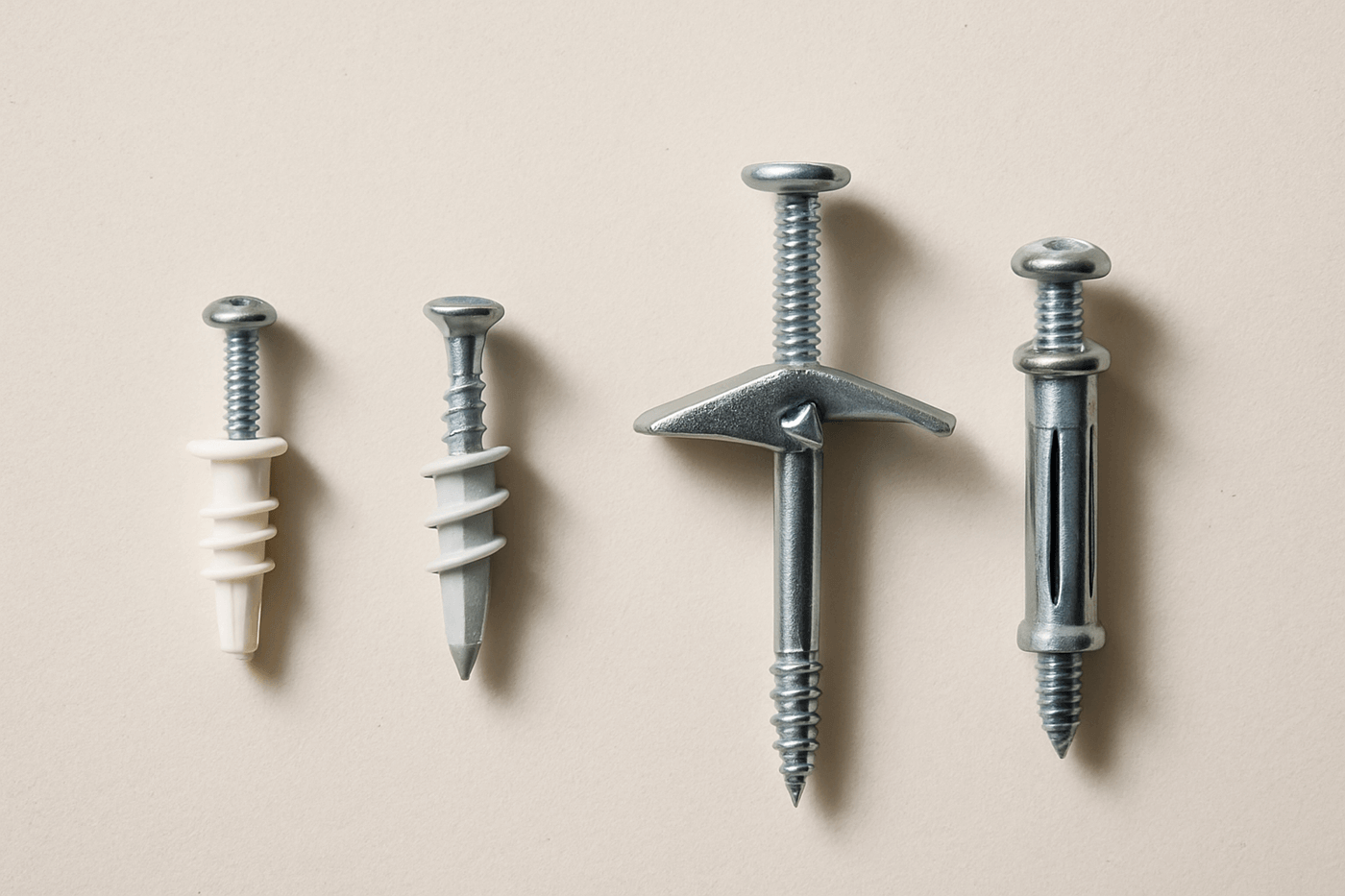
Choosing the right anchor starts with understanding what’s out there. Here’s a breakdown of the most common options and what they’re best for.
Plastic Expansion Anchors
These are the classic, inexpensive anchors most people recognize. You drill a small hole, push in the anchor, and insert a screw; the anchor expands inside the wall to grip the drywall.
- Best for: Light items like picture frames, small hooks, or clocks.
- Pros: Cheap and easy to use.
- Cons: Limited strength and not ideal for heavy loads.
Threaded Drywall Anchors or Self-Drilling Drywall Anchors
Sometimes called “EZ anchors,” these have sharp threads that screw directly into drywall, no pilot hole needed.
- Best for: Medium-weight items like curtain rods, small shelves, or towel bars.
- Pros: Quick to install, beginner-friendly, reusable.
- Cons: Can strip the drywall if over-tightened.
Toggle Bolts for Drywall
Toggle bolts use a spring-loaded metal “wing” that folds to fit through a pre-drilled hole, then opens behind the wall to lock in place.
- Best for: Heavy-duty applications like large shelves, cabinets, or wall-mounted TVs.
- Pros: Very strong; excellent weight capacity.
- Cons: Requires a larger hole and more installation steps.
Molly Bolts (Hollow Wall Anchors)
Molly bolts combine the strength of metal with the stability of expansion. When you tighten the screw, the back of the anchor expands like a toggle, creating a tight grip behind the drywall.
- Best for: Medium-to-heavy loads such as mirrors or small cabinets.
- Pros: Strong, secure, semi-permanent.
- Cons: A bit more time-consuming to install.
Metal and Heavy-Duty Anchors
For projects like a TV mount or heavy shelving unit, metal anchors provide reliable, long-term support. Many can hold 50–100 pounds or more, depending on wall thickness.
- Best For: Heavy shelves, large artwork, or electronics.
- Pro Tip: Always check the manufacturer’s weight limit before installation.
Screw Anchors for Drywall
These are general-purpose anchors that work with standard screws. They can be plastic or metal, and they’re often used for light to medium loads.
How to Choose the Right Drywall Anchor
Factors to Consider
When picking a drywall anchor, think about:
- Weight: The heavier the item, the stronger the anchor needs to be.
- Wall condition: Thinner drywall or damaged areas need extra support.
- Installation method: Do you have a drill, or do you need a no-drill option?
- Removability: Some anchors (like toggles) are harder to remove or reuse.
Weight Capacity Guidelines
Here’s a rough idea of what different anchor types can handle:
- Plastic Anchors: Up to 20 lbs
- Threaded Anchors: 25–50 lbs
- Molly Bolts: 50–70 lbs
- Toggle Bolts: 70–100+ lbs
When in doubt, go stronger than you think you need. It’s better to over-support than risk wall damage later.
Matching Anchor Type to Project
- Light Décor: Plastic or self-drilling anchors
- Curtain Rods or Small Shelves: Threaded anchors or molly bolts
- Heavy Shelves or TV Mounts: Toggle bolts or heavy-duty metal anchors
Step-by-Step Drywall Anchor Installation Guide
Tools You’ll Need
- Drill or screwdriver
- Pencil
- Level
- Anchors and screws
- Optional: stud finder
How to Install Drywall Anchors
- Mark your spot: Use a pencil to mark where the screw will go.
- Drill or insert the anchor:
- For plastic or molly bolts, pre-drill a pilot hole.
- For self-drilling anchors, screw them directly into the wall.
- Insert the screw: Once the anchor is secure, drive the screw in until it’s snug — but don’t over-tighten.
- Test the hold: Gently tug to make sure the anchor is secure before hanging your item.
How to Install Without a Drill
Some anchors, like self-drilling or threaded types, can be installed with just a screwdriver. Press firmly and twist; the sharp tip will dig into the drywall on its own.
Tips for Secure Installation
- Center your anchor, avoid seams or corners.
- Don’t reuse a stripped hole; move slightly over if needed.
- Check for electrical wires or plumbing before drilling.
Common Mistakes to Avoid
- Overloading Anchors: Always check weight ratings and distribute weight evenly.
- Using the wrong type: A lightweight plastic anchor won’t support a TV or heavy shelf.
- Skipping the pilot hole: For anchors that require one, skipping this step can cause cracking or poor grip.
Removing and Replacing Drywall Anchors
How to Remove Drywall Anchors Cleanly
- For plastic anchors, gently pry the rim with a screwdriver and pull out with pliers.
- For molly bolts, unscrew the bolt until it loosens, then push the collar into the wall cavity.
- For toggle bolts, push the toggle through the wall. The small hole can be patched with spackle.
After removal, fill the hole with joint compound, sand smooth, and touch up with paint.
Can You Reuse Drywall Anchors?
Some anchors, like threaded or metal ones, can be reused if undamaged. However, most plastic and toggle types should be replaced once removed for maximum strength and safety.
Safety and Maintenance Tips
Safety Considerations for Heavy Objects
If you’re hanging something heavy, like a large mirror or TV, use multiple anchors to spread the weight, or mount directly into a stud whenever possible. Check the manufacturer’s specs and always err on the side of caution.
Periodic Checks and Maintenance
Over time, vibrations and humidity can loosen screws. Every few months, give wall-mounted items a gentle check to make sure they’re still secure.
Conclusion
Drywall anchors make it possible to hang almost anything, safely and securely, without relying on wall studs. From lightweight décor to heavy-duty installations, knowing which anchor to use and how to install it correctly will help protect your walls and your peace of mind.
If you’re ever unsure which anchor is best for your project or need help mounting something heavy, the experts at BRK Drywall are always ready to lend a hand. We’ll make sure your walls stay strong, your fixtures stay secure, and your home looks its best, no stress, no guesswork.