
Drywall usually looks “set and forget” until a hairline crack shows up, paint starts bubbling, or you notice a faint stain creeping across the ceiling. The tricky part is that many common drywall problems start small and quiet, then snowball if you ignore them.
In this guide, you’ll learn how to spot drywall issues early, what typically causes them, and which drywall repair warning signs mean it’s time to call a pro. Along the way, we’ll point out the most important early signs of drywall damage so you can act before repairs get expensive.
Quick “Spot-It-Fast” Checklist: How To Spot Drywall Issues In 5 Minutes
If you want a simple routine that actually works, do a quick scan once a month (or at least each season). Use a flashlight at an angle; side lighting makes bumps, seams, and bubbling stand out fast.
Start with the areas most likely to develop drywall moisture problems: bathrooms, laundry rooms, kitchens, basements, exterior walls, and anywhere near windows. If something looks “off,” note the location and take a quick photo so you can tell if it’s changing over time.
A fast scan should focus on:
- Cracks that weren’t there before
- New bumps or screw/nail circles
- Stains, soft spots, or peeling paint
- Bubbling or blistering near seams and corners
- Musty smells (often an early moisture clue)
Cracks In Drywall: Drywall Crack Types And Early Symptoms
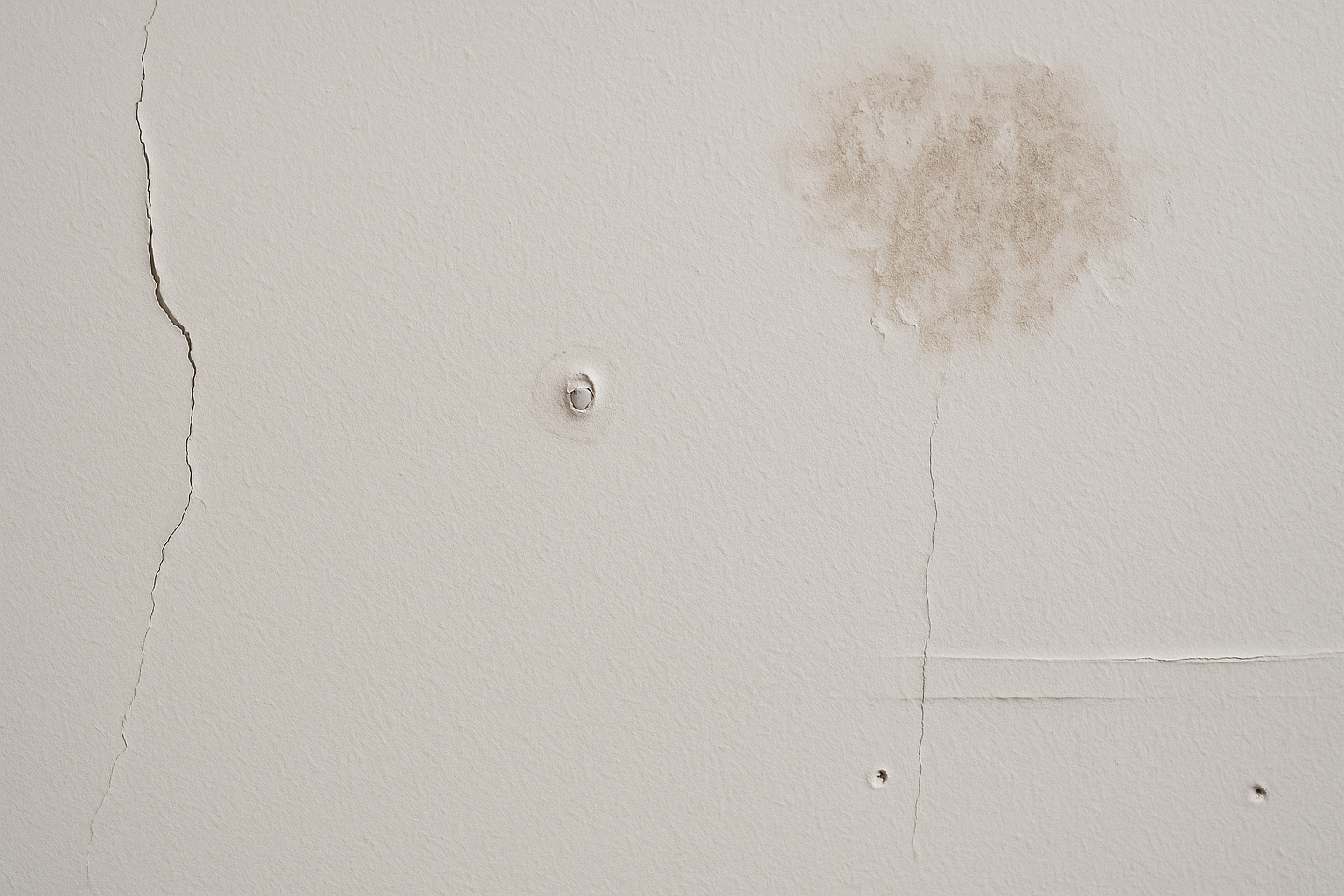
Cracks are one of the most common drywall problems, and they’re not always a big deal. The important part is the pattern, location, and whether the crack is growing. Understanding common drywall crack types helps you tell “cosmetic” issues from movement or moisture.
Drywall Crack Types (What Each One Usually Means)
Hairline Cracks
Hairline cracks are thin, shallow lines that often appear in paint first. You’ll commonly see them above doors, near ceiling lines, or along drywall seams. They’re often linked to normal settling or seasonal changes.
Spiderweb (Crazing) Cracks
Spiderweb cracks look like fine branching lines. They can show up on ceilings or larger wall surfaces and are sometimes connected to older paint, minor movement, or stress in the joint compound as it dries.
Settlement Cracks
Settlement cracks are longer and may follow seams or appear near windows and doors, basically anywhere the wall experiences stress. These are more likely to reopen after patching if the underlying movement continues.
Early Signs Of Drywall Damage From Cracking
Often, you’ll see subtle symptoms before the drywall itself looks “broken.” Watch for:
- A faint line in paint that keeps returning after repainting
- Cracks forming from the corners of doors or windows
- Several new cracks are showing up around the same time
What Causes Drywall Cracking
Most cracks come from normal movement in a home. Drywall expands and contracts with temperature and humidity, and framing settles over time. Cracks can also be caused by poor joint finishing, especially if the seams weren’t taped or feathered properly.
Drywall Repair Warning Signs (Cracks)
A single small crack is usually manageable. But it’s time to take it seriously if:
- The crack widens noticeably or spreads quickly
- Multiple rooms develop cracks at once
- Cracks show up alongside water staining or soft drywall
- Doors/windows start sticking (possible structural movement)
Nail Pops: What Causes Nail Pops And When They Matter
Nail pops are small bumps where a nail or screw pushes outward and lifts the surface. People often ask what causes nail pops, and the answer is usually framing movement, especially in homes that are still settling or experience big seasonal shifts.
You’ll notice nail pops most in ceilings, staircases, and long walls where framing flexes slightly over time. Many are cosmetic, but clusters of new nail pops can hint at a bigger issue.
Common signs include:
- Small circular bumps under the paint
- A “ring crack” around the bump
- Shadowy dots that appear under angled light
If you see nail pops along with new cracking or ceiling waviness, that’s a key drywall repair warning sign.
Water Damage: Drywall Water Damage Signs And Moisture Behind The Wall
Water is one of the fastest ways drywall problems get worse. Drywall can absorb moisture, weaken, and start to deform long before you see a dramatic leak. That’s why catching drywall water damage signs early matters so much.
Typical early symptoms include stains, peeling paint, soft areas, and a musty smell that doesn’t go away. In many cases, what you see is just the surface clue for hidden drywall moisture problems behind the wall.
Drywall Water Damage Signs You Can See
- Yellow or brown “ring” stains on walls or ceilings
- Bubbling or peeling paint near baseboards or window sills
- Crumbling drywall that feels soft when lightly pressed
Early Signs You Might Notice First
Sometimes the smell or feel gives it away before the wall changes color:
- Mustiness in one area of a room
- A wall that feels damp, chilly, or “clammy.”
- Humidity that lingers even with ventilation running
Common Sources Behind Drywall Moisture Problems
- Slow plumbing leaks (supply lines, drains, toilets, tubs)
- Roof leaks or flashing issues
- Window/door sealing issues and poor exterior caulking
- Condensation from poor ventilation or insulation gaps
If moisture is involved, the sequence is always the same: stop the water first, then repair the drywall panels.
Bubbling Or Blistering Paint: Drywall Bubbling Causes
Bubbling paint is easy to dismiss as “bad paint job,” but it’s often a warning sign. The most common drywall bubbling causes are moisture, high humidity, or poor adhesion from incorrect prep or primer.
If the bubbling is isolated and the wall feels dry and solid, it may be adhesion-related. But if bubbles spread, feel soft beneath, or show up near stains or seams, moisture is a strong possibility.
Bubbling often shows up:
- In bathrooms and laundry rooms
- Near windows or exterior walls
- Along seams and corners where moisture can collect
Uneven Seams Or Visible Tape Lines: When Finishing Starts To Show
Seams are natural weak points in drywall. If tape lines start showing through paint, the cause may be poor finishing, or the wall could be moving slightly with seasonal changes.
Visible seams can look like raised ridges, shadow lines, or straight cracks following joint lines. It’s also common to see these issues under harsh lighting or in sunlit rooms where textures become more obvious.
If seams worsen quickly, or drywall tape appears to lift, those are reliable early signs of drywall damage worth fixing sooner rather than later.
Holes And Dents: When Minor Damage Isn’t Always Minor
Most dents and small holes are simple patch jobs. But sometimes the damage tells you something about what’s behind the surface, especially if the area feels weak, papery, or keeps denting in the same spot.
Frequent causes include furniture bumps, door handles, and accidental impacts. However, watch out for:
- Soft spots around the damage (possible moisture)
- Cracks radiating outward (stress spreading)
- Repeated dents in one area (poor backing or thin drywall)
Mold Or Mildew Growth: Drywall Mold Signs And Health Risks
Drywall has a paper facing, and that paper plus moisture can create a perfect mold environment. Early drywall mold signs can be subtle, often starting as tiny specks or faint discoloration in corners.
You may notice:
- Black, green, or dark speckling that returns after cleaning
- Persistent musty smell in one room
- Peeling paint paired with stains or bubbling (often moisture underneath)
Because mold can also grow behind drywall, a surface clean-up isn’t always enough. If it’s recurring or spreading, it’s safer to bring in a professional to locate the moisture source and confirm what’s happening behind the wall.
Sagging Drywall: A High-Priority Warning Sign
Sagging drywall, especially on ceilings, is one of the clearest drywall repair warning signs. It can happen due to water saturation, improper fasteners, or drywall that’s too thin for the span.
Look for wavy lines, bowing between framing, or widening gaps near crown molding. If the sag seems to be increasing or you suspect water, don’t wait on this one.
When To DIY Vs. When To Call A Professional
A simple rule: if it’s small, dry, and stable, DIY is often fine. If moisture, mold, or movement is involved, you’ll usually save time (and prevent repeat repairs) by calling a pro.
DIY Is Often Reasonable For:
- Minor dents and small holes
- A single hairline crack that isn’t growing
- A couple of isolated nail pops (with no other symptoms)
Call A Professional If You Notice:
- Any spreading stains or soft drywall (drywall water damage signs)
- Persistent musty odors or suspected mold growth (drywall mold signs)
- Multiple new cracks or recurring seam failures
- Sagging ceilings or widespread nail pops
Prevention Tips: Keep Drywall Problems From Coming Back
Most homeowners can prevent a surprising number of common drywall problems with simple habits, mainly moisture control and quick leak checks.
- Use exhaust fans during and after showers
- Run a dehumidifier in damp basements
- Check under sinks and around toilets for slow leaks
- Keep indoor humidity consistent to reduce cracking and seam movement
- Fix small paint failures early so moisture can’t creep in
Conclusion
Drywall issues rarely show up without warning. Cracks, nail pops, bubbling, stains, and musty smells are often the earliest clues. Once you know the early signs of drywall damage, you can make smarter calls, patch the small stuff, stop moisture fast, and bring in a pro like BRK Drywall when the problem looks bigger than the surface.
If you’re seeing recurring cracks, evidence of drywall moisture problems, or any signs of sagging or moldy drywall, it’s worth getting expert help before the damage spreads. Contact us today to schedule an inspection and get reliable solutions from BRK Drywall.