
If you’ve ever finished hanging drywall and wondered why your seams still show or small cracks appear over time, the problem might not be your mud; it could be your tape. Drywall tape plays a crucial role in creating smooth, seamless walls that stay strong for years.
The question is: should you use paper tape or mesh tape?
In this guide, we’ll walk through a complete drywall tape comparison, explaining how each type works, when to use it, and expert drywall taping tips to help you achieve a professional finish, whether you’re a DIYer or a contractor.
Why Drywall Tape Matters
Drywall sheets may look solid, but the seams between them are weak points that can easily crack if not reinforced. That’s where tape comes in. Drywall tape bonds the seams together and helps distribute stress evenly across the joint, creating a smooth, durable drywall surface that can be primed and painted.
Without it, even the best compound won’t hold for long, and your wall could start showing hairline cracks within months.
What Is Paper Drywall Tape?
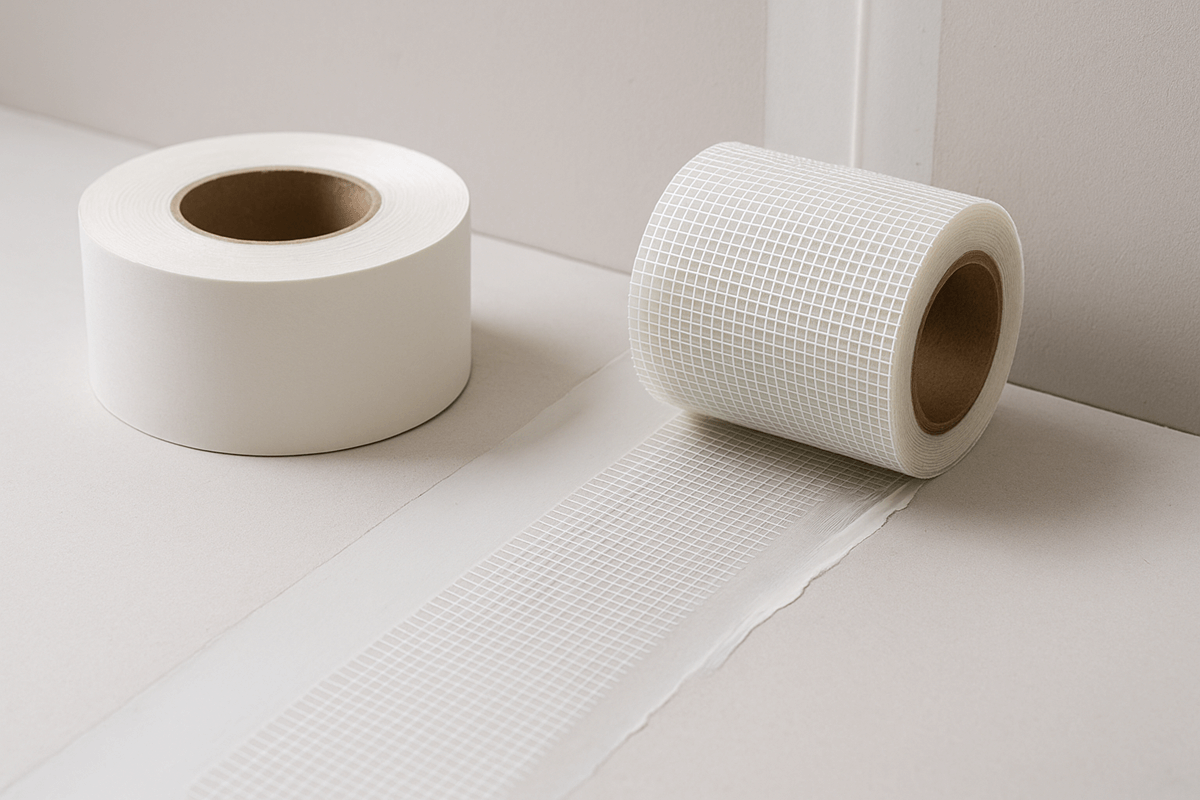
Paper drywall tape is the traditional choice for finishing drywall joints. Made from thin, non-adhesive paper with a light texture on one side, it’s designed to be embedded directly into wet joint compound. A center crease makes it easy to fold and fit neatly into inside corners, one reason it’s a favorite among professional finishers.
When applied correctly, paper tape creates a strong, seamless bond between drywall sheets. It becomes part of the wall surface itself once the compound dries, resulting in a smooth, polished finish that’s ideal for visible areas like living rooms or ceilings.
It’s also cost-effective, making it perfect for large projects or new builds where quality and appearance matter. However, paper tape takes a bit of practice. Because it has no adhesive backing, it must be applied to a layer of wet compound.
If that layer is uneven or too thick, air bubbles can form under the tape. Beginners sometimes find it tricky to get a smooth finish on their first try, but with patience and thin, even coats, paper tape can produce some of the strongest and most professional-looking results in drywall finishing.
What Is Mesh Drywall Tape?
Description and Material
Mesh drywall tape is made from fiberglass mesh and comes with a self-adhesive backing. This makes it much easier and faster to apply; simply stick it over the joint, and you’re ready to start mudding.
Advantages of Mesh Drywall Tape
- Fast and easy: The adhesive backing makes application quick and mess-free.
- Beginner-friendly: No need to worry about bubbles or alignment issues.
- Ideal for repairs: Perfect for patching small holes or cracks.
Disadvantages
- Weaker bond: Needs setting-type compound (“hot mud”) for best results.
- Visible texture: Can show through if not fully covered.
- Not for corners: Doesn’t fold easily for tight seams.
Best for: patchwork, small repairs, and quick jobs where speed matters more than finish quality.
Paper vs. Mesh Tape: Key Differences
Here’s a quick drywall tape comparison to help you see how they stack up.
Strength and Durability
Paper tape is stronger overall and less prone to cracking when properly embedded. Mesh tape works well for small or medium-duty jobs, but can fail if used with premixed mud alone.
Ease of Application
Paper tape requires more skill and must be bedded manually, while mesh tape’s self-adhesive design makes it faster and simpler for beginners.
Finish Quality
Paper tape produces a smoother, more seamless finish with less sanding required. Mesh tape may need an extra coat or two of mud for a comparable surface.
Cost
Paper tape is slightly cheaper per roll, though it takes more time to apply. Mesh tape costs a bit more but saves labor time on small jobs.
When to Use Paper Drywall Tape
If your goal is strength and a perfectly smooth surface, paper drywall tape is the clear winner.
It’s the go-to choice for long seams between drywall sheets, inside corners, and high-visibility walls or ceilings where a flawless finish matters most.
Pro Tip: Always apply a thin layer of joint compound first, press the tape into the mud, and then smooth it out with a 6-inch taping knife. Apply multiple thin coats instead of one thick layer; this helps prevent bubbles and cracking.
Professionals prefer paper tape because it fuses with the compound, becoming part of the wall’s surface. When installed properly, it’s incredibly durable and resists separation even as the structure naturally shifts over time.
When to Use Mesh Drywall Tape
Mesh drywall tape shines in projects where speed and convenience are priorities, like patching small holes, repairing cracks, or working in tight spots. The self-adhesive backing allows you to start right away without applying a base layer of mud, saving time on smaller jobs.
For example, if you’re fixing a small dent in a hallway wall or repairing drywall around an outlet, mesh tape is quick, clean, and efficient. It also pairs well with setting-type compound, which dries harder and faster than traditional joint compound, giving the tape extra strength.
However, it’s important to note that mesh tape isn’t suited for corners or long seams. Because it doesn’t embed as deeply into the compound, it can crack if the wall flexes or shifts. For lasting strength in large installations, paper tape still offers the best results.
Drywall Taping Tips for a Smooth Finish
Whether you choose paper or mesh, following the right drywall taping tips will make all the difference.
Tools You’ll Need
- Joint compound (all-purpose or setting type)
- Taping knife (6” and 12”)
- Mud pan
- Sanding sponge or pole sander
- Corner trowel (for paper tape in corners)
Application Tips
Work with clean, dry surfaces, and always apply thin, even coats. Thick layers take longer to dry and are more likely to crack. Feather your edges to blend the seam into the surrounding wall, and let each coat dry fully before sanding and applying the next.
Common Mistakes to Avoid:
Using mesh tape with premixed compound, overloading mud under paper tape, skipping sanding between coats, or painting before the surface is completely smooth can all lead to uneven results.
Conclusion: Which Drywall Tape Is Right for You?
When it comes to paper vs. mesh tape, there’s no one-size-fits-all answer; it depends on your project.
- Choose paper tape for long seams, corners, and professional finishes that need lasting strength.
- Choose mesh tape for quick repairs, patchwork, or when you’re short on time.
If you’re new to drywall finishing, start with smaller projects to build confidence. And when in doubt, call the experts at BRK Drywall. We’ll help you choose the right materials, apply the best techniques, and make sure your walls look flawless for years to come.